


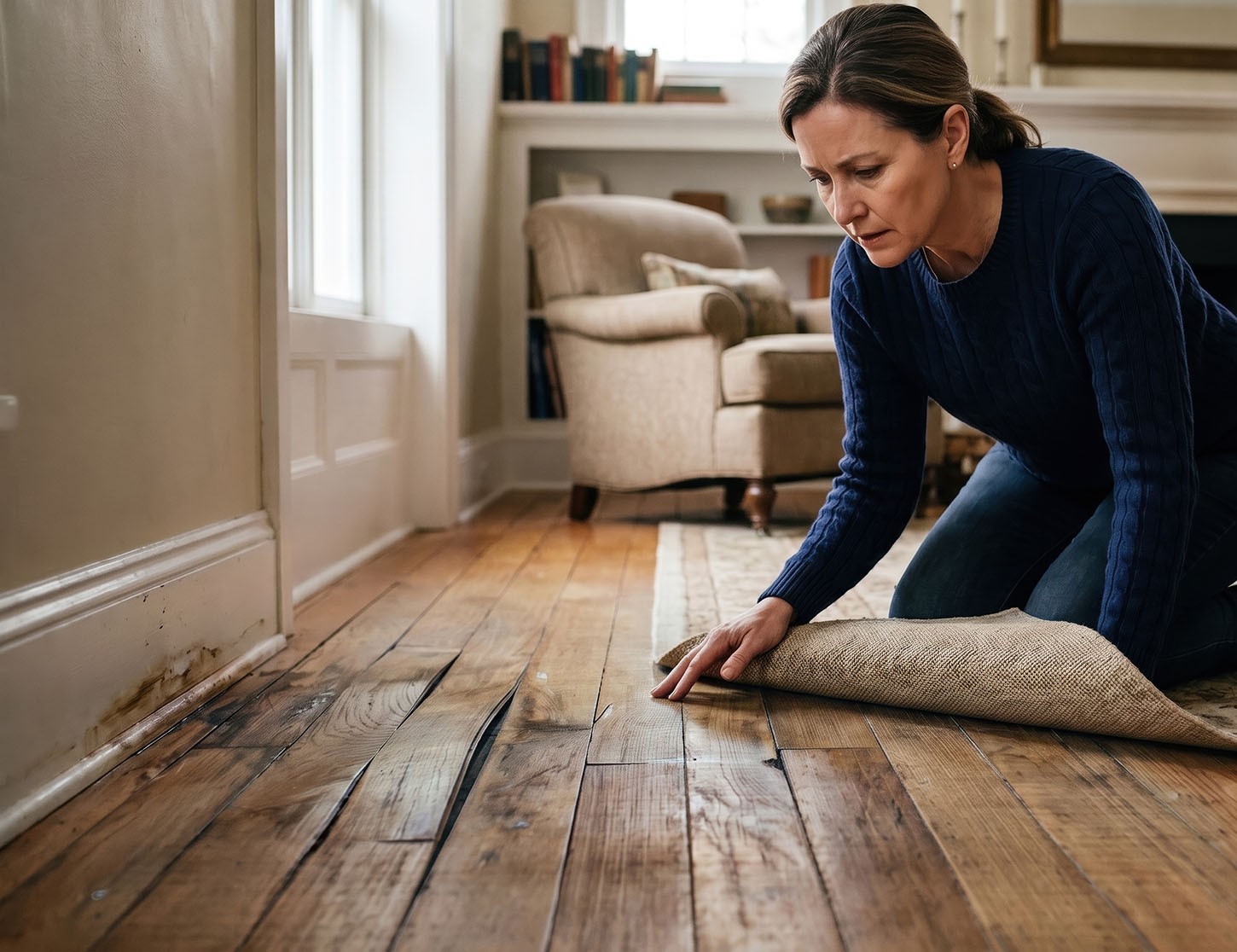
The Coachella Valley puts unique stresses on your interior floors. Searing summer heat bakes exterior foundation slabs while chilled air conditioning runs around the clock inside, creating constant thermal tension underfoot. Subtle changes in how your floor looks, sounds, or feels under bare feet rarely stay isolated. A quick response to minor floor movement in your Palm Desert or Cathedral City home allows you to make localized repairs before small shifts turn into complete subfloor failure.
Slab Moisture and Concrete Vapor Transmission
Most homes across the Coachella Valley sit directly on concrete slabs that absorb and release ground moisture. Searing outdoor ground temperatures paired with cold interior air conditioning pull vapor upward through the foundation slab.
Trapped Vapor and Surface Distortion
Non-breathable floors like solid vinyl, laminate, and engineered hardwood trap rising vapor against the concrete. This trapped moisture weakens glue adhesives, causing perimeter bubbling in vinyl planks and micro-cupping along the edges of hardwood boards. If you notice board edges lifting slightly above the center plane, moisture vapor is already gathering beneath your floor.
Concealed Plumbing Leaks Under Slabs
Aging copper plumbing lines buried inside desert foundation slabs often develop pinhole leaks over time. These slow leaks rarely show up as sudden standing pools of water. Instead, you might spot localized floor discoloration, darkened wood seams, or unexplained warm patches under bare feet. Early detection of these signs prevents moisture from rotting baseboards and spreading into adjoining living areas.
Thermal Expansion and Perimeter Gap Failure
Coachella Valley weather brings sharp temperature swings between triple-digit daytime heat and cooler winter nights. Floating floors expand and contract as temperatures fluctuate, which makes perimeter spacing essential.
Tenting, Peaking, and Buckling
Floating floors need continuous perimeter expansion space along walls, door frames, and transitions. Baseboards, heavy kitchen islands, or built-in cabinetry can accidentally pinch the floor against the drywall, leaving planks with zero room to expand during hot afternoons. The pressure forces plank joints upward, creating raised peaks or sudden tenting along seams across open living areas.
Audible Creaks and Springy Steps
Floors give clear physical warning signs before planks buckle visibly. If your floor develops clicking sounds, squeaks, or a spongy bounce underfoot, boards are likely binding against a perimeter wall. Relieving that perimeter pressure early saves your plank locking mechanisms from snapping permanently under stress.
Fine Desert Sand and Abrasive Wear Patterns
Windblown quartz sand from seasonal desert winds enters homes through sliding patio doors and front entries, acting like abrasive sandpaper underfoot.
Surface Dulling vs. Core Damage
Fine grit grinds down protective surface coatings on hardwood finishes and luxury vinyl clear coats. You can identify abrasive wear by looking across the floor toward natural window light:
Cosmetic Surface Dulling: Light scratches and a foggy sheen mean the wear layer is thinning, which skilled technicians can resolve with a targeted screen-and-recoat.
Deep Core Exposure: Deep gouges that expose raw wood fibers or penetrate vinyl core layers cannot be buffed away and call for single-plank replacement.
Hollow Spots, Loose Grout, and Popping Tiles
Tile floors in Palm Desert and Cathedral City face significant ground movement, foundation micro-shifts, and rapid drying during installation.
Hollow Echoes Underfoot
When mortar beds dry too fast during hot-weather installations, or when concrete slabs experience micro-settlement, the bond between the tile and mortar shears off. You can detect detached tiles before they crack by tapping your floor with a broom handle or your knuckles. A hollow, drum-like echo signals that the tile has separated from the substrate, leaving it vulnerable to snapping under heavy foot traffic.
Powdery and Crumbling Grout Lines
Grout lines provide flexibility and seal the spaces between tiles. If grout begins to crumble, crack, or turn powdery, daily mop water and fine blow-sand wash beneath adjoining tiles. This moisture and grit accelerate the breakdown of neighboring mortar, causing loose tiles to spread across the room.
Soft Spots, Deflection, and Safety Hazards
Ignoring early structural warnings compromises family safety and increases long-term repair expenses:
Spongy Thresholds: Soft, bouncy spots near patio sliders, French doors, or bathroom thresholds signal active moisture damage or deteriorating subfloor concrete.
Dangerous Edge Lippage: Lifted tile corners and curled vinyl edges create sudden tripping points in wide hallways and open-concept layouts.
Subfloor Movement: Uneven floor planes show that underlying concrete cracks are telegraphing straight through your finish floor.
Escalating Restoration Costs: A simple repair of a few loose tiles takes only hours, but moisture left unchecked leads to full room tear-outs.
Targeted Repairs vs. Complete Tear-Outs
Minor surface scuffs often respond well to simple home touch-up kits, but deep structural problems demand professional intervention. When concrete slab moisture, snapped locking mechanisms, or hollow tiles spread across your living space, trying to patch the area without proper equipment often makes the damage worse.
Our team specializes in precision flooring repairs that target the root cause of surface failures. Experienced technicians isolate the damaged area, test subfloor moisture levels, level unbonded concrete, and replace broken planks or tiles with seamless color matching. This focused approach saves you thousands of dollars over the cost of full room demolition.
Prevent Costly Subfloor Repairs with Flooring Innovations
The Flooring Innovations team brings over two decades of local Coachella Valley craftsmanship to your home. Our team knows how desert heat, slab moisture, and windblown sand impact fine flooring. When you notice hollow tiles, localized plank separation, or subfloor moisture issues, our experienced specialists provide reliable diagnostic evaluations and dependable repair solutions.
Visit our showrooms in Palm Desert or Cathedral City to consult with our flooring experts, or contact our team today to schedule an in-home evaluation.


